Videos
Selected clips and short demonstrations: customer types, negotiation tactics, common sales mistakes and more. First up, two new interviews with Izhak.
Now playing: Episode 1: The controlled deadlock: blowing up a negotiation on purposeHow do you know the other side has reached their limit, and there's nothing more to get? One way is to blow up the negotiation on purpose and see what happens. If they panic and give one more step, it worked. If not, you've hit bottom: back off a little and close.
 Episode 1: The salami method: the Israeli tactic that takes one more sliceAre there negotiation tactics that are especially Israeli? There are three, and the first is the salami method: one more thin slice each time, until the price you agreed to is long gone. "Five thousand." "Fine." "Dollars." "Fine." "Per side." Some companies build it into the way they work.
 Episode 2: From a small setup to the full system: the salami in alarm salesYou sell the customer a basic alarm system at a price they'll pay. Then the installer arrives: "Why a switch on the door? Put in a sensor that covers the whole room." And "Who'll hear a bell in an industrial zone? You need an auto-dialer." Until the small setup becomes exactly the original system. The salami method at work, from Izhak Peled's 1970s.
 Episode 3: The laundry in Karmiel: when the competitor has already closedTwo brothers with low overhead can sell at any price. So how do you push a competitor off a deal? Izhak Peled tried telling a competitor how hard the laundry in Karmiel had squeezed him, so he'd back off. The answer: "Well done, except I already closed with him."
 Episode 4: The "lucky try": throw out a price and see what happensThe second Israeli tactic is the opposite of the salami. In Yiddish it's a try, in French "passe-passe", and in Hebrew "matzliach", like the mystery line on a restaurant bill. And if it didn't work? They tried and got caught. You throw out a price, and if nobody notices, you got away with it.
 Episode 5: The done deal: "Turn me upside down, that's all I've got"The third Israeli tactic: "You can say a thousand, you can say five thousand. Turn me upside down, I've got eight hundred on me." Izhak Peled tells his students never to believe it. And the corporate version: you shake hands on net 30, and the formal order arrives with net two years.
 Episode 6: A table without a leg: how to answer "that's all there is""I have seventy thousand in my pocket. You can, do it." After an hour of holding the price, another thirty suddenly turned up. And if there really isn't more? Sell part of the product: the same table, one leg short. A workshop participant tried it on a shipment from Singapore: "Eight thousand? Fine, as far as Barcelona." The series finale.
 Episode 1: The controlled deadlock: blowing up a negotiation on purposeHow do you know the other side has reached their limit, and there's nothing more to get? One way is to blow up the negotiation on purpose and see what happens. If they panic and give one more step, it worked. If not, you've hit bottom: back off a little and close.
 Episode 2: The missing-man tactic: when the decision maker shows up at the endFor over ten years Izhak Peled worked with a CEO for whom the controlled deadlock was a way of life. Plus the "missing man" tactic: you negotiate with people who can't decide, and once you've given everything, the CEO shows up and asks for more.
 Episode 3: A negotiation needs to take timeOn the way to closing a deal worth hundreds of thousands of dollars, the CEO told Izhak: a negotiation needs to take time, so the other side feels they did the work. Then he burned time on trivia and waited, like a hunter, for one sentence he could take offense at.
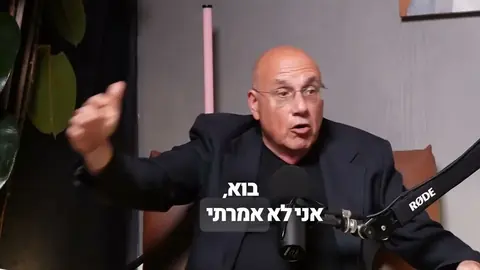 Episode 4: The glasses hit the table: the show that closed deals"We can't pay that much." The glasses fly onto the table, the folder snaps shut, "Come on, Izhak, we're leaving." The other side panics and signs. But a trick repeated every time wears thin, until someone across the table said: we've seen this show before.
 Episode 5: How to handle a controlled deadlockWhat do you do when the other side blows up the negotiation in front of everyone? There are several answers: a deliberate break, an informal talk by the coffee, swapping people on your team, or a counter-deadlock. The most important advice: don't give up. The series finale.
 Episode 1: When is the customer ready to close?Everyone talks about closing, but when do you close? Too early and the customer slips away, too late and the deal gets away. Veteran salespeople feel it in their gut. What do you do without that experience? Spot the closing signals.
 Episode 2: Closing signals: the customer has already bought"And the servicing, where is it done?" A customer who asks that has already decided. What to answer, and which answer drives Izhak Peled up the wall.
 Episode 3: The sales graph: when to closeThe sales process is a graph: the customer climbs until they're ready to buy, and that's where you close. What happens when you try to close too early, and why whoever keeps talking past that point loses the deal.
 Episode 4: Four closing techniques worth knowingThe classic close with pen in hand, two options where each one is a yes, a deliberate mistake ("The red table?" "No, the yellow one!"), and a close for kind-hearted people. Four techniques, and how each one works.
 Episode 5: The third-party close: Ron the gardener's trickA gardener measures the lawn, calls the nursery in front of the customers and reserves 62 meters in the Cohen family's name. The customer just watches, and the deal is already closed. How the third-party close works, and why the boss has to know it. The series finale.
 Episode 1: Why salespeople fear the closeCoffee and small talk are easy. Then the pen comes out and the customer stops you. Why salespeople put off the close, and why without it they're redundant.
 Episode 2: "I did everything and the customer didn't close"The sentence that raises Izhak Peled's blood pressure. Who is supposed to close the deal, the customer? Why salespeople talk themselves out of trying.
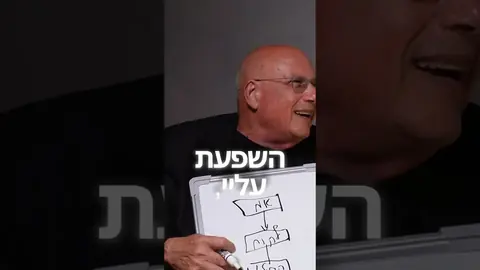 Episode 3: Selling is not tellingThe salesperson explains, the customer is convinced and announces a decision? That's the opposite of selling. How to build a process that's hard to refuse, and who should try to close when the customer is ready.
 Episode 4: The customer said "I'll check": now what?You tried to close, and the customer is off to the competition with your price in hand. What to say at that moment, and which meeting to set before they leave.
 Episode 5: The customer already signed with a competitor. So what?He weighed a Volkswagen against a Peugeot, signed for the Peugeot, and suddenly he's back in your showroom. Why he came back, and how to try to reverse a decision already made. The series finale.
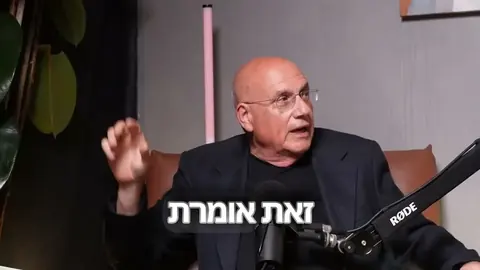 Episode 1: The designer and the carouselA paid advisor has to leave the meeting with a win. So what happens when the saleswoman tells the designer, "A carousel? Nobody works that way anymore!"
 Episode 2: The branch manager's trickA ceramics branch manager pulls out a decor tile and asks the designer for her professional opinion. What happened next? "You're buying here."
 Episode 3: The friend who came to helpThe friend, neighbor or uncle who comes to "help" you buy a car. Why you don't argue with them, and how to make them an ally who sells for you.
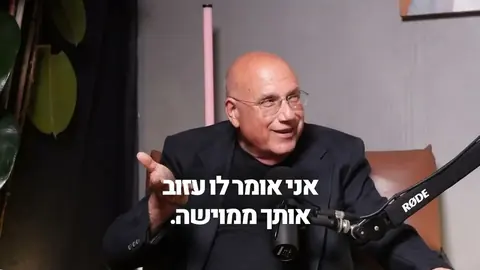 Episode 1: Three ways to get it wrongThe customer wants a product the competitor across the street sells for less. Three common ways to switch them, and all three are mistakes.
 Episode 2: The question that switches a customer"They're selling like hot cakes": a true story from a car dealership, and one simple question that reveals why the customer wants that product.
 Episode 1: A gift for listeningA veteran salesman becomes the customer, starting on a London street.
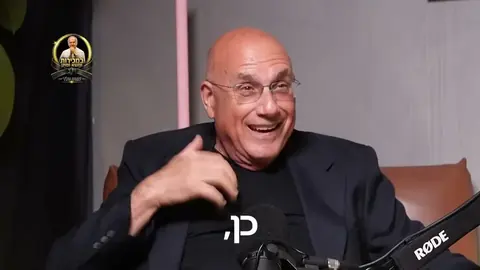 Episode 2: Champagne or watches?A small gift that pulls you in, and a salesman with an endless smile.
 Episode 3: Small talkHaifa, Mount Carmel, a sea view: building rapport in a minute.
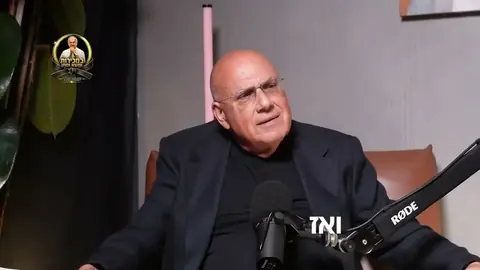 Episode 4: Questions you can't say no toNeeds discovery that leads the customer exactly where the seller wants.
 Episode 5: The suite tour"Very nice!" "Marvelous!" The customers sell themselves, room by room.
 Episode 6: "We need to think about it"8,000 pounds, three payments, and the pen pointed at you.
 Episode 7: The double NelsonThe textbook move, used on two salespeople who know it by heart.
 Episode 8: The master closerThe finale: who was waiting on the way out, and what a friend said back home.
 Discount or not?And what to say when a customer tells you "you're too expensive." An interview with Izhak Peled, part 1.
 Gen InstagramCancellations, objections and cold calls. An interview with Izhak Peled, part 2.
 Selling a holiday timeshareA very aggressive sales pitch, this time aimed at someone who knows the method inside out.
 Selling a cell phoneA live sales demonstration with a customer.
 Elvis: the job interviewA job interview. Nothing is more off-putting than an arrogant salesperson.
 Trade-inNever judge a customer by outward appearances.
 Price objectionThe most common objections are, of course, about price.
 ImprovisationThinking on your feet when the conversation goes off script.
 Customer signalsLearning to hear the small nuances that slip into what the customer says.
 Selling a filterOver-explaining kills sales.
 ShukiA pompous, condescending opening, and what it does to the sale.
 Using unfamiliar termsThrowing around terms the customer doesn't know is a kind of torture, and it pushes the buying decision further away.
 Yehuda and the miceOver-explaining is one of the biggest risk factors in sales.
 The air-conditioning consultantsA salesperson's skewed mindset, in this case the result of poor management.
 Fait accompliA manipulative move used by negotiators all over the world.
 Selling an armchairWhat happens when needs discovery stops halfway.
 The gift loversPavlovian customers get a special kick out of any added value they receive as a “gift.”
 Showpiece purchasesFor psychoanalytic customers, buying is sometimes a way of living out a fantasy.
 The researchersSome rational, economic buyers are so obsessed with getting the perfect deal that they often end up making the wrong decision.
 The jars tacticOne of about 20 tricks and tactics commonly used in negotiation.
 Fixed wordsA human tendency that becomes a powerful tool in the hands of skilled salespeople who are sensitive to others.
 The art of matchingThe foundation of all selling: the ability to adapt to each customer's particular traits.
 Small talkNeutral conversation is a very important part of a professional sales process.
 The rational/economic customerFear of making a bad purchase, combined with the drive to optimize, leads some rational, economic buyers to do “research.”
 The bogey tacticA common move in the back-and-forth between salespeople and negotiators.
 The psychoanalytic customerA customer for whom buying is a kind of dream come true.
 Guided imageryAdvanced sales tools for engaging the customer's imagination while staying true to their personality.
 Brazen retreatA tactic designed to stop the other side from wearing you down and squeezing you.
 The Pavlovian modelChasing “gifts,” prizes, special offers and raffles isn't necessarily something only people on a tight budget do.
Let's train your team.
Planning a conference, a training day or a fresh start for your sales team? Sales leaders, training and HR managers, event organizers and business owners: tell us what you need, whether it's a lecture, a workshop, one-on-one mentoring or consulting, and we'll get back to you soon. 054-4200891
Book a session